
Suzukis labour troubles in India
A routine meeting turned violent
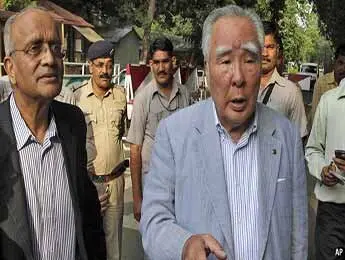
NEARLY six weeks after the Maruti - Suzuki car factory near the Indian capital of Delhi was attacked by over ۱,۰۰۰ workers and a senior manager was killed, the company says that it has not yet been able to establish the reason for the sudden and unexpected violence. Osamu Suzuki, the ۸۲ - year - old chairman of Japan’s Suzuki Motor Corporation(pictured), which controls the Indian company, is currently visiting India and said on Sunday evening that “the cause is not clear to us”.
Most chief executives would not be content to admit such a lack of knowledge so long after an outbreak of serious labour unrest, but this is neither a conventional nor stable area. The highly automated factory is at Manesar, the latest development in a chaotic industrial, commercial and residential sprawl that stretches for 30 miles south-west of Delhi in the state of Haryana. Old agricultural land has been converted into townships, creating social tensions amid frenzied development with hyped land values and inexperienced industrial workforces whose prospects have been dramatically transformed.
It was on July ۱۸th that, according to company, trade union representatives left a routine meeting on a minor dispute for a short adjournment and returned with a crowd of supporters who launched violent attacks that quickly involved between ۱,۰۰۰ and ۱,۲۰۰ workers, killing a ۵۰ - year old senior human resources executive and injuring ۹۶ other managers.
The company sacked ۵۴۶ of its permanent labour force, against whom it says it has clear evidence of violence gained from other staff. Local police have arrested ۱۴۴ of the ۵۴۶, including ۱۲ trade union representatives, and they are being questioned in jail. The factory was immediately shut down and only began to reopen last week, closely guarded by contingents of police.
The dismissals and arrests have hampered the company’s ability to assess the reasons for the crisis, and it is awaiting reports from the police and Haryana state government, which is closely involved.
Executives say the police will not provide them with access to question those arrested, and they cannot expect help from workers who have been sacked. They are now talking to about ۱,۰۰۰ workers who, by the end of this week, are expected to be back at work. The picture emerging is that of a young impressionable workforce with an average age of only ۲۵. It was vulnerable to outside influences from political and other groups wanting to create unrest. Neither the shop floor managers nor the trade union officials appear to have had sufficient experience to handle industrial relations crises. That said, problems of trade union recognition and of poorly - paid contract workers had, according to the company, been solved following strikes last year.
This is a serious setback for a company that has pioneered India’s modern auto industry since it began in ۱۹۸۳ as a ۵۰-۵۰ joint venture of the Indian government and Suzuki to produce the country’s first modern cars, initially at a factory in Gurgaon on the outskirts of Delhi. It is the country’s largest car producer, ahead of Indian, Korean and Japanese rivals.
Speaking through an interpreter, Mr Suzuki condemned the violence as “a criminal act” and “unacceptable”. He said all the workers were his “family members”, and he had told the Indian company’s top management to “impart adequate education to employees” to ensure such violence did not happen again. He had no thought of moving his production lines out of Haryana or India.
He then departed from what were predictable remarks for a company chairman in such a situation-and sought to demonstrate his respect for India and its legal system with the story of Radha Benode Pal, an Indian judge known for his anti-colonial nationalist views and one of eleven jurists on the post-war International Military Tribunal for the Far East who dissented from a guilty verdict for Japan's top wartime leaders. Prominent Japanese have celebrated Pal's memory in recent years. Mr Suzuki said he had mentioned him to demonstrate his "deep commitment to India”. His sincerity was not in doubt, but his audience of journalists was bemused.